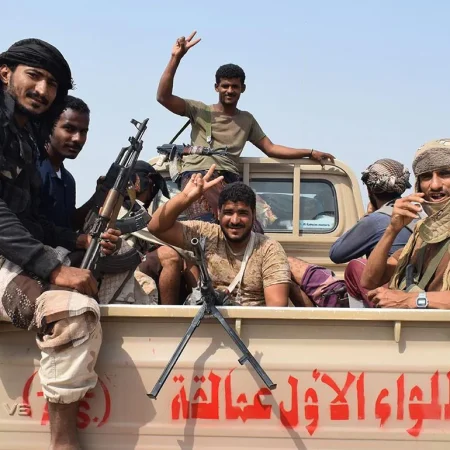
Missile attacks, retaliation, and mounting civilian suffering are raising the risk of a wider Middle Eastern conflict. The urgent question is whether Saudi Arabia and the Houthi movement will choose escalation or a negotiated path toward peace.
The escalating confrontation between Saudi Arabia and Yemen’s Houthi movement has become a major security concern for the Middle East, threatening regional stability, international shipping, energy markets, and the lives of millions of civilians. The latest reported attacks demonstrate how a conflict rooted in Yemen’s internal political divisions can expand into a dangerous confrontation involving neighboring countries and international interests.
On 20 October, according to the reports a Houthi missile strike on a military training camp in Yemen’s Shabwa province killed at least 60 people and injured more than 200. The concerns following Houthi claims of attacks against Saudi infrastructure, although those specific claims have not all been independently verified. These developments underline the seriousness of the situation and the danger of further retaliation.
Why Are Saudi Arabia and the Houthis Confronting Each Other?
The conflict has deep roots. In 2014, the Houthi movement, also known as Ansar Allah, seized Yemen’s capital, Sanaa, amid political instability and the collapse of the country’s transition process. In March 2015, Saudi Arabia led a military coalition intervening in support of Yemen’s internationally recognized government.
The confrontation subsequently developed into a prolonged war shaped by local political rivalries, regional competition, and international involvement. Saudi Arabia has sought to prevent hostile armed forces from threatening its territory, while the Houthis have consolidated control over substantial parts of northern Yemen and developed increasingly capable missile and drone forces.
Iran’s support for the Houthis has added a regional dimension to the conflict. However, Yemen’s war cannot be reduced entirely to a Saudi–Iranian rivalry: the country’s internal divisions, governance failures, economic collapse, and competing armed groups remain central to the crisis.
Saudi Arabia Faces a Critical Security Challenge
For Saudi Arabia, renewed Houthi attacks represent a direct challenge to national security and economic stability. The kingdom must protect its population, airports, energy facilities, and transport infrastructure while avoiding a military response that could trigger a prolonged and costly regional war.
Saudi Arabia possesses substantial military resources, but defending a large territory against repeated missile and drone attacks presents a complex challenge. Even when incoming weapons are intercepted, the threat can disrupt aviation, undermine investor confidence, increase insurance costs, and create uncertainty for businesses and international partners.
The Houthis, meanwhile, may calculate that attacks on strategically important targets can increase pressure on Riyadh and strengthen their negotiating position. Yet such a strategy risks provoking a more extensive military response and worsening the conditions of Yemen’s already vulnerable population.
The Houthis and the Risk of a Wider War
The Houthi movement is not simply a local armed group with influence inside Yemen. Its military capabilities and geographical position give it the ability to affect regional security, particularly around the Red Sea and the Bab al-Mandab Strait.
Threats to commercial shipping can have consequences far beyond the battlefield. The Red Sea connects important maritime routes between Europe and Asia, while disruptions around the Strait of Hormuz can place additional pressure on global energy supplies. Simultaneous instability in these strategic waterways could create severe economic consequences.
On 20 October, Brent crude oil had reached approximately $111 per barrel amid heightened geopolitical concerns and reports of attacks affecting Saudi infrastructure and regional shipping. Such movements demonstrate the sensitivity of energy markets to security threats, although prices are influenced by multiple factors.
If the confrontation expands, the consequences could include higher fuel prices, increased shipping costs, supply-chain disruptions, and additional pressure on countries already facing economic difficulties.
Civilians Must Not Become the Price of Retaliation
The greatest tragedy of the Saudi–Houthi confrontation is the suffering imposed on civilians, particularly Yemenis who have endured years of conflict, displacement, hunger, and the collapse of essential services.
Renewed airstrikes, missile attacks, and ground fighting risk increasing civilian casualties and destroying infrastructure that communities depend upon for survival. Hospitals, schools, homes, water systems, and humanitarian operations must not be treated as acceptable targets.
The United Nations reported on 19 October that more than 200,000 people had been displaced within Yemen since the renewed fighting began, while thousands more had crossed the Gulf of Aden to seek refuge in Djibouti. These movements demonstrate that the crisis is not merely a military contest; it is also a growing humanitarian emergency.
Saudi civilians also have a fundamental right to live free from missile attacks, and Yemeni civilians have the same right to security, dignity, and protection. International humanitarian law requires every party to distinguish between military objectives and civilian objects and to take feasible precautions to reduce harm.
There can be no lasting security if civilian populations on either side of the border continue to live under the threat of attack.
What Must Happen Next?
Saudi Arabia and the Houthi movement must recognize that military escalation alone cannot resolve Yemen’s political crisis. Airstrikes, missile attacks, and threats against economic infrastructure may inflict damage, but they cannot produce a sustainable political settlement.
First, both sides should agree to halt cross-border attacks and attacks against civilian infrastructure. Second, regional governments and international mediators should establish an urgent channel for negotiations to prevent further retaliation. Third, humanitarian organizations must receive safe and reliable access to communities affected by the fighting.
Saudi Arabia should use its regional influence to support a negotiated settlement that protects its territory while addressing Yemen’s political and economic needs. The Houthis should end attacks that endanger civilians and international shipping and engage meaningfully in a political process.
Iran and other influential regional actors also have a responsibility to support de-escalation rather than actions that could widen the conflict. The United Nations, Oman, and other diplomatic partners should work toward practical agreements on security, humanitarian access, economic recovery, and an inclusive political process.
Author: Naser Khan Zazai, Journalist and Researcher
World News Day 2026: The Right to Know, the Duty to Report